


The Butterfly Effect: How Small Moments Shape a Lifetime

Updated: Aug 10, 2025
Have you ever heard of the butterfly effect? It’s the idea that a tiny action, like a butterfly flapping its wings, can trigger a chain of events that leads to large, unexpected outcomes. Rooted in chaos theory, the concept has become a popular metaphor for how small, seemingly insignificant moments can shape our lives in profound ways.

We like to believe we’ve carefully planned our path. But when we look back, many of the roads we’ve followed were set in motion by a minor, unplanned event.
Earlier today, I told my husband, “If we hadn’t bought that house with the cat 50 years ago, we probably wouldn’t have had a lifetime of loving and entertaining feline companions.”
That one decision, choosing a house that came with a cat, turned out to be the first link in a long chain of joyful cat stories. But it wasn’t the only small moment that sent my life in a new direction.
If I hadn’t taken a keypunch class while waiting to hear from my college, I wouldn’t have landed a job at Standard Oil in Chicago. If a colleague in Marketing Research hadn’t suggested I talk to someone in IT, I might have never entered that field, or the next few that followed. If my company hadn’t supported ongoing education, I wouldn’t have earned two master’s degrees or attended annual ten-day seminars at their expense.

If I hadn’t signed up for a class on starting a business, taught by a lawyer who later became our family’s attorney, we would have never house-hunted in Park Ridge, Illinois, where he grew up. We lived there for 25 years.
If our neighbors in Del Webb hadn’t wintered in Naples, we might have chosen another place to retire. If the friends we made in Naples hadn’t started looking at continuing care communities, we might not be where we are now.
Small decisions. Big life shifts. We often don't know what’s pivotal until much later.
Sometimes, the “what ifs” lead to heartbreak.
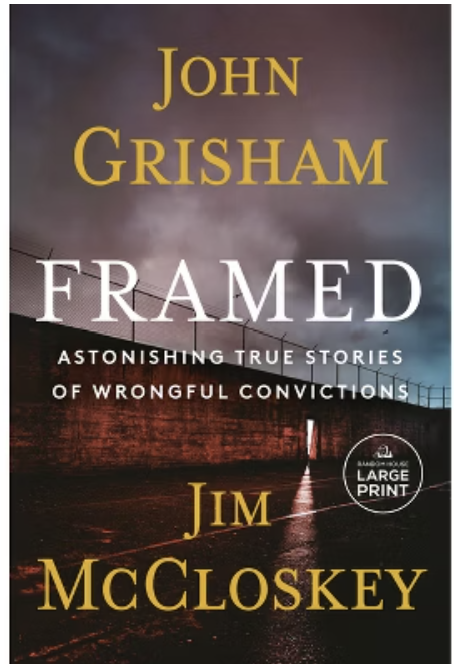
I’m reading Framed: Astonishing Stories of Wrongful Convictions by John Grisham and Jim McCloskey. One chapter tells the story of three young Army men who went out for a rare night of celebration. One was getting married the next day. They didn’t drink, but someone suggested a bar in Savannah where women modeled bikinis. Turned away for being underage, they got lost trying to find another place, then pulled into a police station to ask for directions. At that moment, a murder witness passing by said, “The shooter’s car looks a little like that one.” That chance remark—uttered at the exact wrong moment—led to a nightmare of wrongful convictions and life sentences. Grisham ends the chapter with haunting questions: What if the bar had let them in? What if they hadn’t pulled into the police station?
The butterfly flapped. And everything changed.
Andy Andrews explores a similar ripple effect in his book The Butterfly Effect. He tells how ABC once honored Norman Borlaug for saving millions from starvation by developing wheat that could grow in harsh climates. But who really made that possible? Was it Henry Wallace who, after serving as Franklin Roosevelt’s Vice President, hired Borlaug to lead a wheat hybridization project? Or George Washington Carver, who inspired Wallace’s interest in plant genetics? Or Moses and Susan Carver, who rescued an infant after his mother, their friend Mary Washington, was kidnapped and likely killed by Quantrill’s Raiders? They named him George Washington Carver in her honor.

The deeper you look, the longer the chain.
Andrews writes about how we tend to rank our actions, thinking visiting a sick friend is meaningful, but a 60-second chat with a store clerk is forgettable. But his friend, a man named Jones, offered this insight: “When you begin to know that everything matters—that every move counts as much as any other—your life will begin to have a permanent purpose.”
That stuck me. Because it’s true. We never really know which choice, or moment, will echo into the future. A casual introduction. A brief conversation. A turn down one street instead of another. These tiny pivots can shape not only our lives, but those of our children, friends, and even strangers.
I’m a spreadsheet person. When we bought our first house, I weighed the neighborhood, the schools, the square footage, the condition, and, of course, the charm. I gave each house a score. But I didn’t assign points to the fluffy ‘tuxedo’ kitty curled up in the corner of one of the listings. Yet that little cat turned out to be one of the most enduring influences of all.

’ll probably keep making spreadsheets. It’s how I’m wired. But I’ve come to understand that the most impactful parts of life are often the ones I never saw coming.
What about you? What small moments shaped the course of your life?


I always say, no such thing as coincidence!