


Coloring: The Childhood Hobby That Doubles as an Anti-Aging Secret

Updated: Aug 24, 2025
Coloring: An Anti-Aging Secret
In 2019, hubby and I were happily wintering in Florida in our motor coach. Some fellow campers started a coloring group. We’d sit around with our books and pencils, chatting about everything from recipes to world events.

Then, on March 11, the CDC declared COVID-19 a pandemic. Within days, the RV resort emptied as snowbirds rushed home, worried about getting locked out of their states or Canada. And just like that, we were the last campers standing—holding down the fort in a nearly empty park for 10 months while waiting for our CCRC apartment to be ready.
During the quarantine, I discovered you can only watch so much TV or rearrange the cabinets so many times before your brain starts to melt.
So, out came my coloring books. I’d loved coloring as a kid — the waxy smell of crayons, the way you could turn a blank page into something bright and happy. Picking it up again as an adult, I got the same feeling: relaxed, content, and secretly a little smug about my perfect blending on a sunflower petal.
When we finally moved into our apartment, I formed a coloring club. We set up outside, with enough space between us to keep the social distancing police happy, and colored away while the Florida breezes blew.
Coloring is Not Just for Kids
Forget the notion that coloring is only for 8-year-olds with glitter pens. Studies show coloring is as good for relaxation as music. And unlike music, you don’t need to be able to sing on key or tune your violin.
It’s also surprisingly good for your brain. Even people with cognitive impairment find it calming and enjoyable. Plus, it can be a lifesaver for caregivers. (1)
A while back, I wondered if a coloring book might be a good birthday gift for a neighbor with cognitive impairment. He was a guy, so I wasn’t sure. I gave it a try. His wife told me he loved it. Now they color together every day. It sparks conversation and gives them something fun to share. They even hang his “gallery” on the wall — and let’s be honest, framing your own work never gets old.

The Conversation Starter I Wish I’d Had
My mom had vascular dementia, and conversations with her were… well… repetitive; five questions, on a loop every ten minutes. One of them was “What size shoe do you wear?” which baffled me until Dad explained someone had given her a pair of shoes she kept under her bed, and she was trying to find someone who could wear them.
I can’t help thinking if I’d had coloring books with flowers, vintage fashion, or baked goods (her specialties), we might have had more to talk about. You can ask about the picture, the colors, or if it reminds them of anything. It’s a gentle way to keep the chat going.

Picking the Right Coloring Book
If someone hasn’t colored since they were a kid (or has arthritis or cognitive challenges), keep it simple. ZenDoodle’s BIG PICTURE series has themes such as birds, butterflies, and animals. Charley Harper’s animal coloring books are wonderful — deceptively simple but full of personality.

I found the book Wildlife Coloring Books for Nature Lovers has books with wildlife, including a Freshwater Fish book for my friend’s fishing-obsessed husband, which comes with fun facts about each fish. You could also print free pages from Pinterest in every theme imaginable — Halloween, 4th of July, ocean scenes, fantasy, or “cute” (think baby animals that make you say “awwww”).

A Word About Mandalas
Some studies say coloring mandalas is good for relaxation. Dr. Rodski, a neuroscientist, created coloring books full of geometric designs, reasoning that the repetition gives the brain the sense of order it secretly craves. (2)
The science makes sense: picking colors taps into your right brain (creativity and imagination), while following the pattern and symmetry puts your left brain (logic and order) to work. One study even showed that just 20 minutes of coloring a mandala boosted mindfulness and left people feeling calmer, happier, and more energetic.
That’s all well and good, but for me — a big-picture person (pun not intended) — just looking at the complications of a mandala is enough to make me put the book back on the shelf. Who knows, maybe I should try, but I suspect I’d be more frustrated than relaxed.

One of the women in our coloring group, however, loves them. She says it’s like getting lost in a maze where she doesn’t have to find the exit. While the rest of us are breezing through our cats, fish, or flowers, she’s happily shading in her hundredth tiny arc. To each their own — but I’ll stick with the sunflowers.
Some tools to help the coloring-challenged
Some people can pick colors like they’re born with a built-in rainbow. I am not one of those people. I lean heavily on the sample pages in the book The New Guide to Coloring. It's like having a personal color coach with tips on shading, blending, and picking palettes so you don’t end up with a lime-green horse (unless you want one).
And it helps you pick the right supplies, such as markers, pencils, or gel pens. A big tip if you use markers: put an extra sheet underneath your drawing, or you might leave permanent marks on your dining room table. My mother was not pleased.

Bottom Line?
Coloring is a simple, joyful way to relax, keep your hands nimble, spark conversations, and — if you’re me — justify your growing stash of colored pencils. Whether you’re in a motor coach during a pandemic, in your apartment with friends, or with a loved one who needs a gentle, calming pastime, a coloring book can be more than just pretty pictures.
It’s therapy you can carry in your tote bag.
PS : My two award-winning artist cousins might chuckle at the need for coloring books and guides, but for the rest of us art-challenged people, a simple coloring book can be bliss. Visit their websites: Diane Leonard, September Mcgee
References
Joel Bobby, L.I.C.S.W.,Coloring is Good for Your Health, Mayo Clinic, August 15, 2022
Dr. Stan Rodski, Brain-Science: Coloring for Agility and Fast Learning (the only coloring book proven to remove stress), amazon.com, October 4, 2016 (if you type “stan rodski coloring books” in Amazon search, you’ll find a lot of them)
11 Key Ways That Memory Care Residents Can Benefit From Coloring, Integracare.com, August
Adrienne Santos-Longhurst, Can Coloring Really Help You Relax? 9 Reasons to Try Adult Coloring, Healthline.com, May 23, 2023
5 Reasons to Use Coloring Books for Seniors, vineyardseniorliving.com
Books - Some ideas to get you started
Amazon must have thousands of coloring books – type your interest into the search (e.g., baking, birds, animals, cars, etc.) and add adult coloring book:
Easy Large Print coloring book


Peterson Field Guide Coloring Books – and scroll down the page to see coloring books with all sorts of fascinating creatures.

Xeroxfour coloring books (cars, trucks, monster trucks)

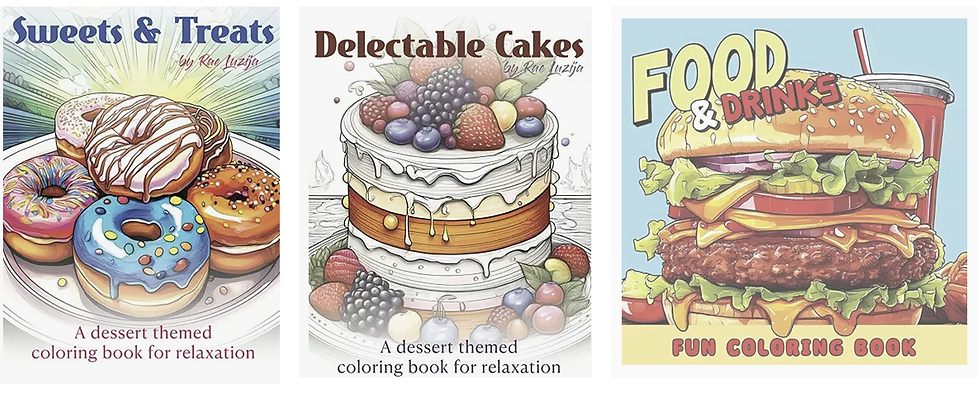
Baking, Food and Drink (in Amazon search baking coloring books or food and drink coloring books. Just be sure you aren’t hungry when you color these).
Apps to convert photos into coloring pages
Coloring.app - upload a photo of a family portrait, pet picture, vacation snapshot, or artwork to create personalized coloring pages. Supports JPG, PNG, and other popular formats.
Fotor – it’s best if it’s a simple photo. Look at the website for samples of its creations


Another great blog - thank you Sue!